Planning
Site assessment, shadow analysis, load sizing, and feasibility study.
Green energy
Evaluate savings, payback, system sizing, financing, on-grid/off-grid choices, panels, inverters, and mounting structures before booking a consultation.
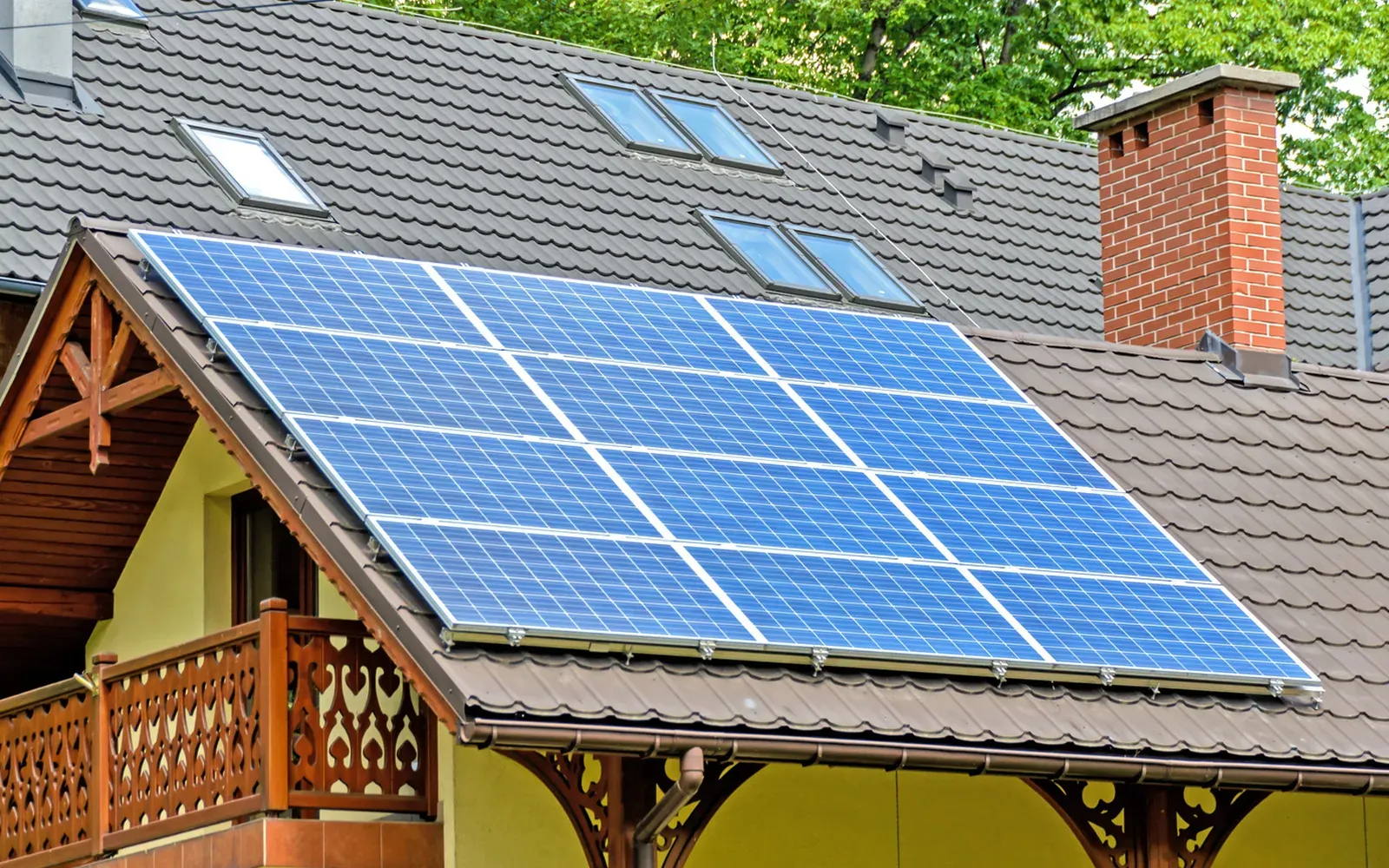
End-to-end delivery
A structured approach that keeps commercial and residential solar projects on schedule, on budget, and high-performing.
Site assessment, shadow analysis, load sizing, and feasibility study.
System design, component selection, net-metering paperwork, and approvals.
Procurement, installation, testing, and commissioning by certified teams.
AMC, remote monitoring, cleaning, and performance optimisation.
Interactive Sizer
Select your current monthly electricity bill to calculate the recommended system size, net costs after government subsidies, and estimated financial payback.
Calculations are based on the MNRE subsidy framework, a tariff baseline of ₹9.5/unit, and average annual generation baseline of 1,400 units/kW.
Commercial & Industrial
Select a system size from 10 kW to 100 kW. Commercial projects typically do not qualify for residential MNRE subsidies, so calculations reflect pure CAPEX and savings.
Based on ₹9.5/unit tariff and 1,400 units/kW/year generation baseline. Actual costs vary by site conditions, components, and approvals.
Financing models
Choose the ownership structure that fits your balance sheet. Both models deliver savings; the right one depends on capital availability and risk preference.
Client makes the upfront investment and owns the solar plant. Highest lifetime savings, depreciation benefits, and full control.
Best for: Businesses with available capital and long-term facility ownership
SKYNXT or a financing partner owns the plant; the client pays only for the solar power consumed at a pre-agreed tariff.
Best for: Commercial & industrial clients who prefer off-balance-sheet energy savings
Get a free site assessment and commercial solar proposal tailored to your rooftop and energy usage.
Request a solar quote →Savings logic
A typical 3 kW system can cut monthly electricity costs significantly, with subsidies reducing the upfront investment.
Why solar
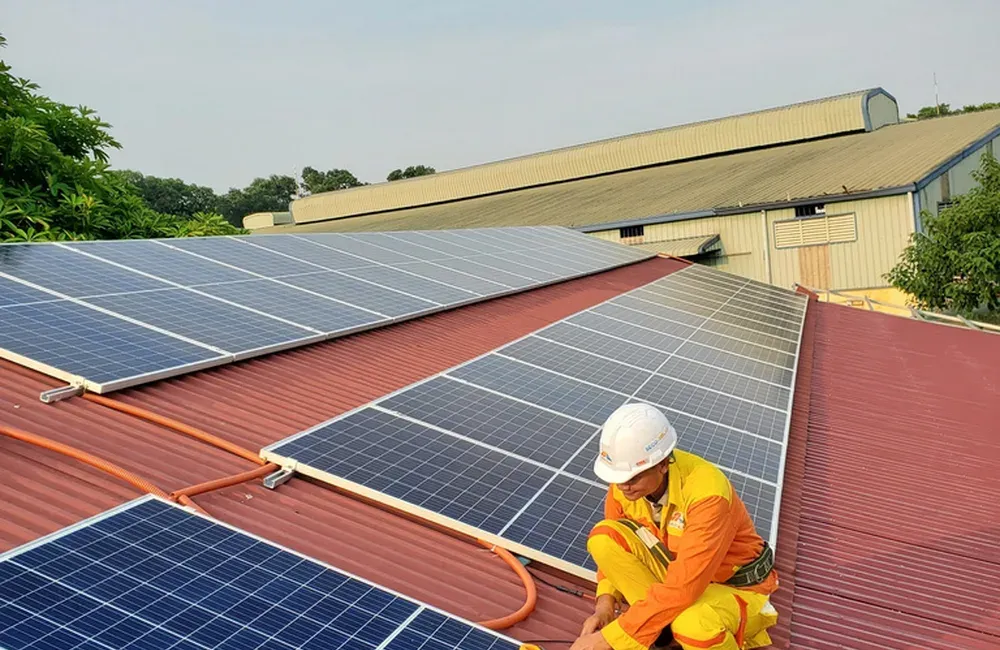
The handbook highlights lower bills, tariff protection, reduced carbon footprint, and greater energy independence.
The handbook frames rooftop solar as a way to reduce recurring grid electricity costs, with an example of over 90% monthly bill savings.
Solar generation gives homeowners a more predictable power source as electricity rates rise.
Rooftop solar is a clean, renewable energy source that can reduce greenhouse gas emissions.
Generating power at home reduces reliance on the grid and supports greater energy resilience.
Central and state government subsidies can significantly reduce the upfront cost of solar installation, making it more accessible.
Homes with solar installations often see an increase in property value due to lower energy costs.
System design
Choose between monocrystalline, polycrystalline, bifacial and Mono PERC panels; string or micro-inverters; and concrete or sheet rooftop mounting.
Sizing guide
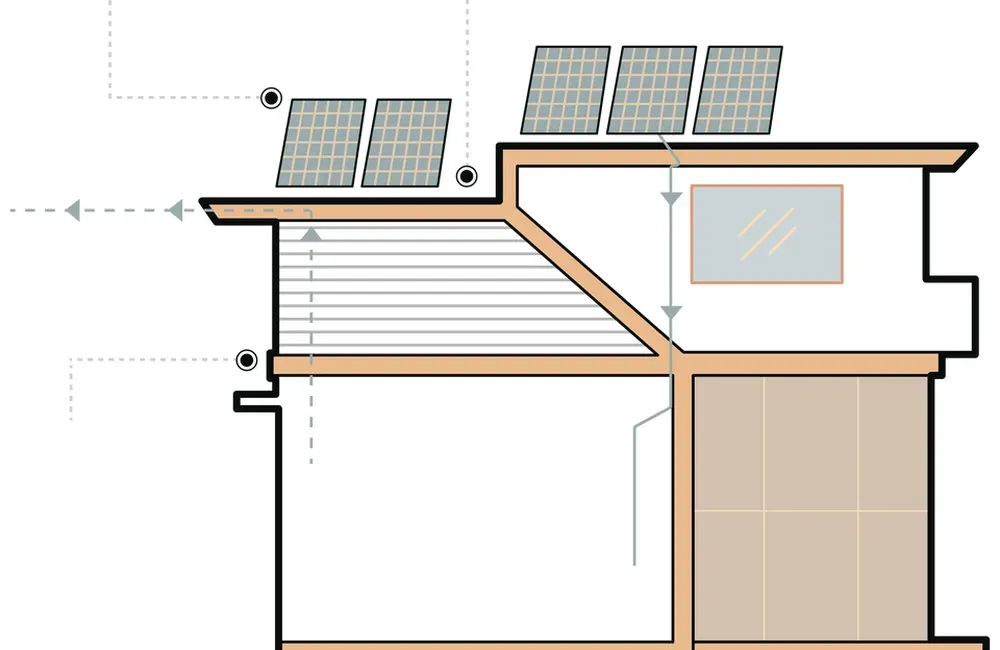
The handbook uses 1,400 units per kW per year as a planning baseline, then adjusts for consumption, rooftop suitability, sanctioned load, and shading.
| System size | Annual generation estimate | Average annual savings |
|---|---|---|
| 2 kW | 2,800 units/year | ₹18,200/year |
| 3 kW | 4,200 units/year | ₹33,600/year |
| 4 kW | 5,600 units/year | ₹44,800/year |
| 5 kW | 7,000 units/year | ₹63,000/year |
| 10 kW | 14,000 units/year | ₹1,40,000/year |
Appliance Guide
Review typical appliance counts that can run simultaneously on different solar system capacities as shown in the handbook.
| Appliance type | 3 kW System | 5 kW System | 10 kW System |
|---|---|---|---|
| Air Conditioner (AC) | No | 2 | 3-4 |
| Water Pump | No | No | 1 |
| Fridge | 1 | 1 | 1 |
| Geyser | 1 | 2 | 2-3 |
| Washing Machine | 1 | 1 | 1 |
| Television (TV) | 1 | 1 | 2 |
| LED Bulbs | 3-4 | 3-4 | 6-7 |
| Tube Lights | 1-2 | 1-2 | 3-4 |
| Ceiling Fans | 4-5 | 4-5 | 6-7 |
Financing
Financing depends on loan type, subsidy eligibility, component choice, net-metering charges, and after-sales service.
Some banks offer solar loans, often with higher interest rates and more paperwork.
A home-loan bundle can be an option for new builds; the handbook cites SBI as an example.
The handbook includes subsidy examples such as ₹78,000 for a 3 kW system.
Solar Loans
The handbook highlights options for solar financing including personal solar loans and home loan bundles.
| Loan Type | Collateral Requirement | Interest Rate | Key Details |
|---|---|---|---|
| Personal Solar Loan | Collateral-free (no personal assets required) | 16%–18% | Flexible, but has higher interest rates and paperwork |
| Bundled Home Loan | Your home serves as collateral | 10% | Can be bundled with a new build. State Bank of India (SBI) is the sole provider |
Suitability
Before proceeding with a solar installation, verify your site against the handbook's key structural requirements.
At least 100 square feet of shadow-free rooftop space is required per kilowatt (kW) of capacity.
Sizing must align with the sanctioned load allowed on your electrical connection parameters.
Must be reinforced concrete, metallic sheet, or shingles. Asbestos roofs are structurally unsuitable.
System comparison
On-grid, off-grid, and hybrid systems serve different reliability, backup, and net-metering needs.
| Type | Best for | Notes |
|---|---|---|
| On-grid | Urban areas with reliable grid power | Lower upfront cost, net metering, subsidy eligibility up to 10 kW, but does not prevent outages. |
| Off-grid | Rural or unreliable-grid locations | Uses battery storage, avoids outages, but has higher upfront cost and no net-metering benefit. |
| Hybrid | Homes that want both backup and grid interaction | Connected to the grid and batteries; typically the most expensive option. |
Components
A rooftop solar system is an arrangement of panels, inverters, mounting structures, meters, and accessories working together.
Solar zones in India
Click on any region below to review the solar irradiance metrics, key active states, and specific city baseline performance details.
Active circles/states: Haryana, Punjab, UP, Rajasthan
High solar irradiance, excellent for year-round generation
Steps to go solar
Click on each milestone phase to review key documents, discom permitting, and site operations.
Understand your current consumption, peak usage, and monthly expenditure to size the right system.
Check for shadow-free area, structural strength, orientation, and tilt angle of the roof.
Based on consumption, sanctioned load, and available rooftop space, select 2 kW to 10 kW or more.
Look for experience, reputation, quality components, after-sales service, and subsidy assistance.
Compare personal solar loans, home loan bundles, and government subsidy benefits.
Includes permits such as load changes, name transfer, discom permission, and net metering applications.
Central and state subsidies can reduce upfront costs by up to 40% for eligible residential systems.
Professional installation, net metering setup, and system testing before handover.
Monitor generation, track savings, and benefit from reduced electricity bills for 25+ years.
Panel types
The handbook compares panel types by efficiency, appearance, cost, and best-use scenarios.
| Panel type | Efficiency | Cost | Best for |
|---|---|---|---|
| Monocrystalline | High (18–22%) | Higher upfront | Limited rooftop space, premium installations |
| Polycrystalline | Moderate (15–17%) | Lower upfront | Budget-conscious projects with adequate space |
| Bifacial | Very high (20–24%) | Premium | Ground-mount and elevated installations with reflective surfaces |
| Mono PERC | High (19–23%) | Mid-to-high | Best balance of efficiency and cost for rooftop systems |
Inverter choices
The right inverter depends on rooftop layout, shading, budget, and long-term maintenance preferences.
Multiple panels connected in a series to a single inverter. Cost-effective, reliable, and widely used.
Consideration: Performance affected if one panel is shaded
Each panel has its own inverter, converting DC to AC independently at the panel level.
Consideration: Higher upfront cost, more components to maintain
Mounting Structures
The handbook details the specifications and selection of mounting structures to withstand high winds and minimize shadow risks.
Recommendation: Aluminium rail mounting structures
Lightweight, strong, secure fit directly on metal sheets
Recommendation: Hot-dipped galvanised steel structures (6 to 9 ft tall)
Rust-proof, weather-proof, elevates panels to reduce shadow risks from surrounding structures
Ensure that your solar installer uses chemical anchoring to secure mounting structures. This technique uses waterproofing chemicals to make certain that the structure remains free of water seepage for a decade, while also filling in any minor cracks that may occur.
Talk to SKYNXT
Reach out for technical consultation, site survey planning, product selection, solar sizing, or edge micro data centre requirements.
A-15, Imperial Enclave, Near Sector-30 market, Umri Road, Kurukshetra, Haryana, India 136118
The contact form is not yet connected to a live endpoint. Reach out directly and we will respond within one business day.
Sales@skynxtech.com